Annual
Report
2015

Annual
Report
2015
The Aluno Presente (Pupil Present) program is part of the international initiative Educate a Child of the Qatar-based Education Above All Foundation, which is present in 40 countries. Its mission is to ensure the right to a basic education for all children in the city of Rio de Janeiro aged 6 to 14.
SOCIAL MOBILIZATION
To achieve its goals, the project mobilizes and engages, in a cross-sectoral manner, families, educators, school staff, public bodies and local institutions through a team of professionals who go to different neighborhoods across the city visiting homes, residents associations, health centers, small businesses and community organizations.
In partnership with the Rio de Janeiro Municipal Education Department, the project works primarily on the identification and location of out-of-school children in order to return them to the municipal education system. It also monitors these pupils once they are back in school to prevent them from dropping out again, through direct dialogue with school administrators with a view to accommodating the children and also monitoring their time at school.
The project is a pioneering experience in Brazil and since October 2013 it has identified 13,395 out-of-school children aged 6 to 14 and enrolled 11,010 of them in local schools. By the end of 2016, the goal is to get 21,000 children back into school and strengthen the protection network that is necessary so that all the children and families in vulnerable situations identified by the project can have their basic rights assured.
| 1 |
| Socio-territorial diagnosis |
| 2 |
| Active search for out-of-school children |
| 3 |
| Mobilization and engagement on the local level |
| 4 |
| Mobilization of young people and their schools to stop children dropping out |
| 5 |
| Community and mass media communication campaign |
| 6 |
| Cross-sectoral engagement of different civil society actors and government bodies |
| 7 |
| Monitoring and assessment |
| 8 |
| Systematization and advocacy |
 |
 |
CROSS-SECTORAL WORKING GROUP |
| One of the main results of the project is the cross-sectoral engagement that exists within the municipal government involving the Departments of Education, Health and Social Development, which produces an integrated working strategy by the public authorities in the territories with the greatest occurrence of out-of-school children and establishes the conditions for its sustainability via public policy. |
SOCIO-TERRITORIAL DIAGNOSIS |
| In-depth understanding of the profile of the out-of-school children and their location in the city by conducting a technical socio-territorial diagnosis and sharing this knowledge with the entire network of social workers in the city. |

| 13.395 |
| out-of-school children identified |
| 11.010 |
| children enrolled |
| 1.475 |
| local organizations identified |
| 626 |
| local organizations working in partnership with the program |
| 877 |
| schools offering primary education from the municipal system cooperating with the program |
MONITORING AND ASSESSMENT |
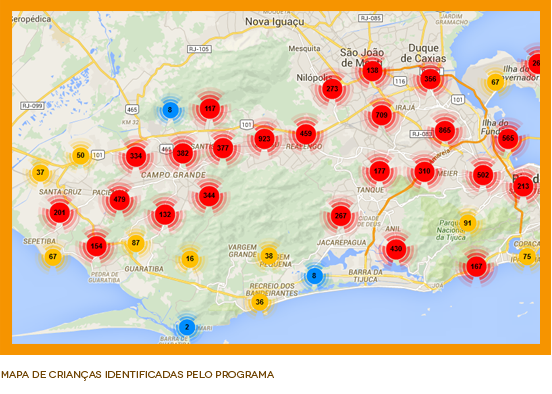
| The Monitoring and Assessment System accompanies and systematizes the goals and the results achieved throughout the whole process and it consists of an innovative and large-scale database. The database displays georeferenced information in the city of Rio de Janeiro of the children who are either out of school or at risk of dropping out.
It is fed systematically by the “Active Search” strategy and by the efforts inside the schools to stop children dropping out and it can, at any time, generate reports, indicators and key data for the development of the project and for training and systematization processes.
|
TECHNICAL SEMINAR ON METHODOLOGY |
| Organized by Cidade Escola Aprendiz, the Education Above All Foundation and the Rio de Janeiro Municipal Education Department, the Technical Seminar on the Methodology of the Pupil Present program brought together nearly 100 people on October 6, among them local coordinators and experts, to begin preparations for the systematization of the project. The seminar was held in the auditorium of the Museum of Art (MAR) in the city. |
 |
| 5.549 |
| visits |
| 4.415 |
| individual visitors |
| 10.419 |
| pageviews |
 |
| 1.937 |
| page likes |
| 4.381 |
| posts likes |
| 804 |
| posts shared |
STRATEGIC PARTNERS |
| The project also has important partnerships and relationships with UNICEF, the London School of Economics and Political Science, the Federal University of Rio de Janeiro, the Catholic University of Rio de Janeiro and the Oswaldo Cruz Foundation, in addition to a group of approximately 1,475 local public, private and civil society institutions that directly and indirectly contribute to its success. |
The Reference Center in Integral Education is an initiative by governmental and non-governmental organizations for the purpose of promoting research, development and the free dissemination of references, strategies and instruments that can contribute to the formulation, management and assessment of Integral Education policies so they can be developed by schools, organizations, networks and governments on any level.
90% of Brazilians understand that an integral education is necessary for the future of new generations.
(Source: Datafolha, Itaú Social Foundation, 2013)
Partners of the Reference Center include the Brazilian organizations Cenários Pedagógicos (Pedagogical Settings), Cenpec – Education, Culture and Community Action, the Integrated Center for Sustainable Development Studies and Programs (CIEDS), the Itaú Social Foundation, the SM Foundation, the Alana Institute, the C&A Institute, the Inspirare Institute, the Natura Institute, the Rodrigo Mendes Institute, the Action and Social Innovation Movement (MAIS) and the National Union of Municipal Education Leaders (UNDIME), as well as the Latin American School of Social Sciences (FLACSO) and the United Nations Educational, Scientific and Cultural Organization (UNESCO).
| 1 |
| Strengthen the public agenda for the right to an Integral Education
|
| 2 |
| Support the planning, implementation, monitoring and assessment of Integral Education programs and policies |
| 3 |
| Train and prepare agents for Integral Education |
Advocacy |
| production of references and news, use of social networks and participation in forums and debates |
Methodological development |
| support and qualify the integral education policies of states and municipalities |
CRAFTING OF INTEGRAL EDUCATION PROGRAMS |
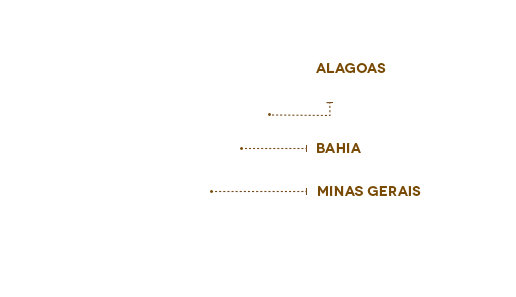
| The Reference Center develops training and advisory programs so states and municipalities can implement and qualify their Integral Education policies. We work with the state governments of Alagoas, Bahia and Minas Gerais and with the municipalities of São Miguel dos Campos (in Alagoas) and Ipatinga (in Minas Gerais).
|
| 422 |
| news articles |
| 44 |
| national experiences |
| 17 |
| international experiences |
| 20 |
| reference materials |
| 74 |
| shared calendar items |
| 8 |
| glossary entries and methodologies |
| 1.100.327 |
| visits |
| 926.989 |
| individual visitors |
| 1.608.986 |
| pageviews |
Between 2014 and 2015, the Reference Center’s website audience increased sevenfold.
| 26.623 |
| page likes |
| 3.921.715 |
| people reached |
| 147.510 |
| post likes |
| 41.567 |
| posts shared |
| The Integral Education In Practice platform provides resources organized into key topics to support managers and technical teams to develop, implement and assess their own integral education programs. |
| 4 mil |
| users |
| 20 mil |
| visited pages |
| 6,5 min |
| average navigation time |
| 60% |
| of users return to the platform |
DISCUSSIONS ON A NATIONAL CURRICULUM STANDARD |
| In partnership with the Inspirare Institute and representing the Reference Center, Cidade Escola Aprendiz participated in discussions with the Movement for a National Common Curriculum Standard on the inclusion of the topic of integral development in the text of the new standard. After the meetings, the Reference Center, in an action that directly involved most of the members of its Coordination Group, gathered curriculum experts and specialists in integral education to identify and systematize the contribution of different areas of knowledge to the integral development of students. |


| On June 10 and 11, the International Seminar on Integral Education: Practices for an Educating City was held in the city of Rio de Janeiro. The event, organized by the Reference Center and by the Action and Social Innovation Movement (MAIS), was attended by 540 people from 18 Brazilian states as well as international guests, with representatives from the local governments of Rosário (Argentina) and Barcelona (Spain). Also present were representatives from the Ministry of Education, the Minas Gerais State Education Department, the Latin American School of Social Sciences (Flacso), the Rio de Janeiro Municipal Education Department, the Federal University of Rio Grande do Sul, the University of São Paulo, Move, the Itaú Social Foundation, the SM Foundation and the Inspirare Institute. The event was also used to launch the In Practice website and the In Practice Kit. |
The program aims to strengthen the social demand for Educating Cities in Brazil through projects and experiences with a view to integration between communities, schools and territories. The program runs strategic actions for building a city geared towards the integral development of individual people.
The concept of integral education is directly related to the idea of educating cities, wherein territories – urban or rural – have their management geared entirely towards guaranteeing the integral development of their inhabitants. Accordingly, an Educating City discovers talents and invests in the potential of its communities, while focusing on an ongoing educational action that answers to everyone.
Dissemination |
| production and dissemination of reference material |
Advocacy |
| mobilization of strategic representatives and participation in forums and debates |
Projects |
| support and development of projects in the territories |
| Human Rights Education Centers (HRECs), developed from a partnership between the Municipal Department of Human Rights and Citizenship and the São Paulo Municipal Education Department with funding from the Human Rights Office of the Presidency of the Republic, are intended to ensure the implementation of a Human Rights Education in the municipal education system, as part of a territorial strategy for building citizenship.
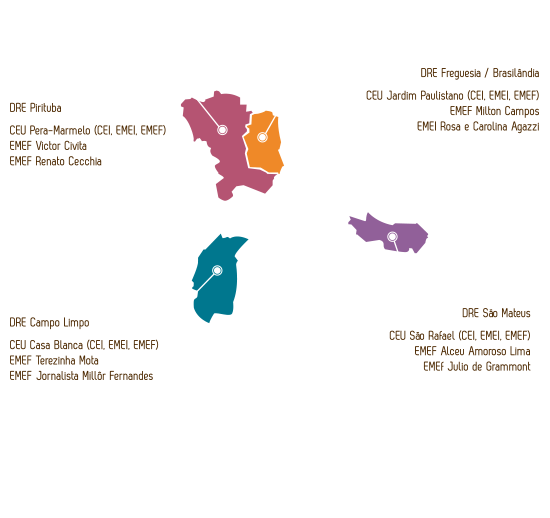
The purpose of the HRECs is to disseminate a culture of promoting human rights in the city of São Paulo, serving as permanent hubs of Human Rights Education in the territories where they are located. Planned to reinforce the engagement between school and community, the HRECs develop actions that involve the community’s different spaces and agents, thereby strengthening civic awareness and the concept of educating cities. Two partner organizations supported the implementation of the project: Cidade Escola Aprendiz, which helped craft the policy through educational coordination and through assessment and monitoring, and the Vladmir Herzog Institute, which was responsible for the structured training processes, preparing educational material and advising the participating schools. WHERE THE CENTERS ARE LOCATEDThe HRECs operate from 4 Unified Education Centers and their 12 schools, in addition to two “satellite” units, which cover the 4 macroregions of São Paulo: São Rafael Center (East Side), Jardim Paulistano Center (North Side), Pera-Marmelo Center (West Side) and Casa Blanca Center (South Side).
|
| Fostering of a culture of |
| participation |
| by strengthening the democratic spaces within the schools and by structuring 5 working groups (4 in the territories and one central group), where different agents from the territory and from the school community can discuss the main local issues and topics relating to human rights |
| Creation of |
| 4 libraries |
| by making available a public archive with human rights content to complement the libraries at the Unified Education Centers or the reference services in the territory, transforming them into places of reference in Human Rights Education in the territory |
| Preparation and release of the |
| Socio-Territorial Diagnosis |
| of the territories where the program has operated |
| Development of a |
| schedule |
| of 40 Human Rights Education cultural activities, in dialogue with the local agenda of the territories and considering the different agents and initiatives |
| Development of a process of |
| territorial engagement |
| by mobilizing local agents and public and private services to promote integration between the school and the territory, and the preparation of 4 Sustainability Plans by holding 19 workshops on the plan (10), on sharing the diagnosis (5) and on the affective mapping of the territory (4), and training 120 Young Communicators |
| Systematization of the |
| experience |
| so the project can be replicated in other places and contexts |
| The project Trilhas da Cidadania – A língua portuguesa pela cidade (Citizenship Trails – Portuguese language around the city) was set up in 2012 with the goal to help integrate immigrants, refugees and asylum seekers into the city of São Paulo, through Portuguese language teaching and knowledge production on Brazilian culture and civic awareness.
It was conceived and implemented by Cidade Escola Aprendiz in partnership with the Caritas charity unit of the Roman Catholic Archdiocese of São Paulo and the publisher Editora Moderna, which funded the initiative, and with the support of the Sacred Art Museum of São Paulo. METHODOLOGY: EDUCATIONAL TRAILSTrilhas Educativas (Educational Trails), a social project developed by Cidade Escola Aprendiz, is based on the assumption that the teaching-learning process becomes more relevant the more it connects with the life of the leaner and their community. It aims to develop an autonomous and pleasurable relationship with knowledge, along educational pathways that combine the interests of the learners with the learning expectations and the teaching potential of the territory. For refugees and asylum seekers, most of whom reach the country in conditions of extreme vulnerability, understanding and interacting with the urban space through the Educational Trails project is a strategy for integration and appropriation of the city. By talking to the students about their interests and needs, these pathways prompt the educational agents from the urban space to cater to these demands, while also causing the agents and organizations to improve the service to these people. Recognized by the Ministry of Education, the Educational Trails “are pathways along which the educational process extends beyond the classroom to public squares, alleyways, ateliers, studios, workshops, businesses, museums, theaters, cinemas, amusement parks, sports centers, libraries and bookstores, among other things”. REFUGEES AND ASYLUM SEEKERSDuring the five editions of the project, more than 100 refugees and asylum seekers participated in educational excursions to various locations in the city of São Paulo, in accordance with the most pressing needs of the participants. The trips included visits to the following places: Employment and Entrepreneurship Support Center (CATe), Portuguese Language Museum, São Paulo State Immigration Museum, São Paulo Resistance Memorial, São Paulo State Pinacoteca Gallery, São Paulo Municipal Market, Luz Subway Station, the Pateo do Collegio Jesuit building, stores and other locations. HIGHLIGHTS OF THE PROJECT
ON ACCOUNT OF THE CITIZENSHIP TRAILS PROJECT, CIDADE ESCOLA APRENDIZ WAS CERTIFIED AS A STRATEGIC PARTNER IN THE CITY OF SÃO PAULO OF THE OFFICE OF PERMANENT SOLUTIONS OF UNHCR (OFFICE OF THE UNITED NATIONS HIGH COMMISSIONER FOR REFUGEES) |
A project developed with the Regional Teaching Board of Butantã and the Education Faculty of the University of São Paulo for the purpose of guiding the participatory process of building the integral education policy in the region. The project aims to develop strategies that can serve as a reference for other regions in the municipality, supported by the consolidation of São Paulo as an educating city.
HIGHLIGHTS OF THE PROJECT
|
| SITE |
| 1.009.578 |
| pageviews |
| 57.500 |
| likes |
| 44.728 |
| followers |
The Aprendiz website page views increased 15% from last year.
EDUCATIONAL POTENTIAL OF THE URBAN TERRITORY: TOWARDS AN EDUCATING CITY |
| We started the engagement between schools, urban services and cultural groups to consolidate the center as an educational territory. The project aims to organize the training of 30 teachers from the São Paulo municipal education system, in partnership with the Regional Education Board of Ipiranga.
Participants in the project are the São Paulo Pinacoteca Gallery, the Portuguese Language Museum, the Open University for Environment and Culture of Peace (UMAPAZ) and the local organizations Hey Sampa, APĒ – estudos em mobilidade, Movimento Entusiasmo, Associação Novolhar, Instituto Catalisador and Criacidade. |
OLDNET |
| With the goal of bringing together different generations through technology, the OldNet project arranges for teenagers to teach seniors to work a computer. The project started operating in 2015 in the Santa Cruz College, which is the project’s main donor partner, in the west side of São Paulo.
Using strategies for integration between young people and seniors, OldNet operated throughout the year promoting the digital inclusion of seniors with the help of high school students. In addition to the weekly classes, the project also organizes games festivals and cultural trips to the city that provide opportunities for sharing knowledge and intergenerational dialogue. In this process, friendships and trust are established, demonstrating the potential of this project given the challenges of growing old in the urban space. |
SCHOOLS NETWORK |
| With the support of the Municipal Fund for the Rights of Children and Adolescents, the CCR Institute and the law firm Demarest , Cidade Escola Aprendiz identified 15 good examples of engagement between municipal schools in São Paulo and other agents of the System to Guarantee the Rights of Children and Adolescents.
The result of this research can be found in the report and the video that present the initiatives and processes established to overcome threats of violations and to promote the rights of children, adolescents and young people in the territories. |
|
|
|
|
SEMINAR “FROM SCHOOL ENVIRONMENTAL EDUCATION TO THE EDUCATING CITY” |
| To reflect on the role of the school, the environment and the community in the construction of an educating, sustainable and fair city, Cidade Escola Aprendiz organized the meeting “Community and School: cultivating an Educating City” in partnership with São Paulo’s Open University for Environment and Culture of Peace (UMAPAZ). |
SEMINAR “CONNECTIONS IN THE TERRITORIES: CULTURE AND EDUCATION” |
| To discuss the connection between culture and education as a factor enhancing the development of an Educational Territory, Cidade Escola Aprendiz and the Chácara Sonho Azul preschool staged the seminar “Connections in the Territories: Culture and Education – necessary approaches” in Jardim Ângela, a district in the far south of São Paulo. |
|
|
|
|
CONVERSATION CIRCLE “EDUCATING CITIES AND INTEGRAL EDUCATION – WHAT CAN BRAZIL LEARN FROM THE EXPERIENCE OF BARCELONA?” |
| The debate sought to examine and discuss the experience of the educating city of Barcelona, Spain, in light of the Brazilian context, with the goal of encouraging new actions and relationships to advance the agenda in the city. The city of Barcelona is home to the International Association of Educating Cities and has been a reference on the topic for more than 20 years. |
18TH ANNIVERSARY OF CIDADE ESCOLA APRENDIZ |
| In the year that we completed 18 years working in defense of the rights of children and adolescents, we chose a location that symbolizes our mission, where transformation through education truly occurs in an innovative, inclusive and democratic manner: the Desembargador Amorim Lima primary school. In addition to celebrating the date, we also staged the debate “25 years of the Child and Adolescent Act: Dialogues between city and education” and we released the publication of the Schools Network project, developed by Cidade Escola Aprendiz. The event was also used to award the “Inventive Educator Prize” to André Gravatá, of the local organization Movimento Entusiasmo; to Ariel de Castro Alves, founder of the Special Child and Adolescent Commission of the Federal Council of the Brazilian Bar Association; and to Tião Rocha, of the Grassroots Center for Culture and Development. |
At Cidade Escola Aprendiz, communication is recognized as one of the key tools for development and social change. The knowledge that we have been producing for 18 years in the areas of education and human rights, with a focus on childhood and youth, has allowed us to develop content and strategies to mobilize, engage and influence public policies in a profound, rapid and innovative way.
But we realize that these causes are not ours alone and we recognize that the social impact we produce is far more significant when we work together with others. This is why we support companies, organizations and groups to strengthen their position with an effective communication of their causes. We advise on the planning, development and implementation of strategies for campaigns, websites, social networks, printed material and publications that are geared towards the construction of a society that is fairer and more equal for our children and young people.
Communication of Causes |
| Development and implementation of strategic communication plans for the dissemination of causes, media advocacy, behavioral change, mobilization, social transformation and educommunication |
Communication Management |
| for social organizations, institutes and foundations, strengthening their institutional position and developing internal and external communication actions. We develop technology, content and layout for websites, newsletters, social networks, institutional presentations, activities reports and systematization of projects |
Press Relations |
| Based on a specialized education and human rights approach, we prepare press releases, publish news, send out emails to our network of journalists and compile clippings from online content |
Preparation of Materials |
| Production of content for publications (printed and online), articles, newsletters and social networks, as well as systematization of projects, methodologies and programs. |
Digital Tools |
| Creation of digital tools for social organizations and groups, such as the development of responsive websites, georeferencing maps and platforms, the creation and management of customized databases for projects, and programs and applications |
|
|
|
|
NEW PARTNERSHIPS |
|
RENEWED PARTNERSHIPS |
|
Promenino is a project run by the Telefônica Foundation that helps guarantee the rights of children and adolescents and that contributes to the eradication of child labor. Cidade Escola Aprendiz is responsible for producing content and for managing the platform, the social networks, the newsletters and for developing actions in support of the project’s campaigns.
|
| 360 |
| articles |
| 1.943.978 |
| visits to the site |
| 3.056.074 |
| pageviews |
|
| 353.977 |
| page likes |
| 192.252 |
| posts likes |
| 50.108 |
| shares |
 |
| 5.134 |
| followers |
 |
| 4.021.571 |
| views |
The Telefônica Vivo Foundation is a social responsibility initiative that uses technology to create and support innovative social projects in Brazil. Cidade Escola Aprendiz is responsible for producing content and for managing the Foundation’s institutional platform and its social networks.
|
| 40 |
| articles |
| 883.844 |
| visits to the site |
| 1.128.245 |
| pageviews |
|
| 82.380 |
| page likes |
| 18.509 |
| posts likes |
| 1.683 |
| shared posts |
|
| 9.299 |
| followers |
|
| 376.066 |
| views |
Created in 2004, the Guia de Empregos Aprendiz employment website, in partnership with the Itaú Social Foundation, announces job vacancies focusing in three categories: interns, young apprentices and the third sector. It features the opportunities generated by local business clusters and by creative and solidarity economy initiatives.
|
| 1.440 |
| jobs published |
| 779.234 |
| visits to the site |
| 1.417.140 |
| pageviews |
|
| 2.903 |
| page likes |
|
| 66 |
| posts (original content and posts from the VilaMundo site) |